

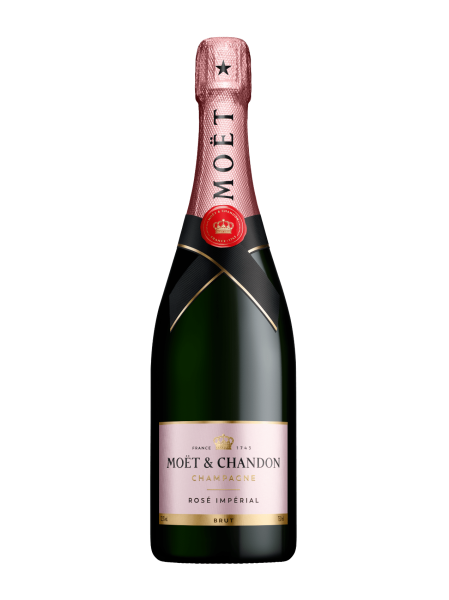
Brut Impérial Rosé embodies the vibrant essence of champagne rosé at its finest. This radiant expression of Moët & Chandon style captivates with bright red fruit notes and seductive amber highlights. Each bubble of this rosé champagne carries our 280-year heritage of celebration and French savoir-faire. Ready to uncork the moment?
BLEND & CRAFT: THE ART BEHIND OUR BRUT ROSÉ
Every bottle of Champagne Brut Impérial Rosé embodies our savoir-faire, where three noble grape varieties unite in perfect harmony. This artful assemblage creates the signature radiance and romantic expression that defines our Brut Rosé. Each cépage contributes its distinct character, carefully balanced by our cellar masters.
40 to 50%
30 to 40%
10 to 20%
Our reserve wines (20 to 30%) enhance the blend's intensity and ensure its remarkable constancy, creating a champagne of sublime subtlety inside every bottle.
Dosage: 7 g/liter
Contains sulphites
TASTING NOTES: A PINK, SPARKLING GLOW
A glowing colour
Pink with amber highlights. The delicate hue captures light with a radiant warmth, evoking the first blush of sunset across a summer sky.
A bewitching bouquet
- A lively, intense bouquet of red fruits: wild strawberry, raspberry, cherry
- Floral nuances of rose
- A slight hint of pepper
The effervescent character of champagne elevates these aromas, creating a sensory experience that delights with each sparkling sip.
Understanding the rosé color
The enchanting pink hue comes from brief skin contact during production, where red grape skins transfer their pigments to the wine. This delicate process requires precise timing to achieve the perfect blush that defines rosé champagne.
AN EXPRESSIVE PALATE COMBINING INTENSITY AND SUPPLENESS
The juicy, persistent intensity of berries unfolds across the palate, where strawberry, raspberry and redcurrant dance together in perfect harmony. This vibrant fruitiness meets the elegant fleshiness and firmness of peach, creating a signature champagne expression of radiant character.
The experience concludes with a subtle note of refreshing menthol, balanced by the delicate sweetness of gooseberries, raspberry, and wild strawberry that lingers gracefully with each effervescent sip.
Which note will you savor first?
-
![]() Gooseberries
Gooseberries
-
![]() Raspberry
Raspberry
-
![]() Wild strawberry
Wild strawberry


SERVING & PAIRING: IS ROSÉ CHAMPAGNE SWEET OR SAVORY?
Ideal Temperature & Glassware
Serve rosé champagne chilled to 10–12°C to reveal its vibrant fruit character without muting its complexity. Pour into tulip-shaped glasses rather than flutes—the slightly wider bowl preserves effervescence while allowing the bouquet to develop fully.
Food Pairings to Elevate the Moment
The versatile nature of rosé champagne bridges both sweet and savory worlds magnificently. Pair with delicate sushi, grilled summer peaches, or soft creamy cheeses for an effortless celebration.
Dish | Flavor | Why It Works |
|---|---|---|
Oysters | Briny | Enhances mineral notes |
Berries | Sweet-tart | Mirrors the wine's fruitiness |
Soft Cheese | Creamy | Balances effervescence |
FAQ – YOUR ROSÉ CHAMPAGNE QUESTIONS ANSWERED
What is rosé champagne?
Rosé champagne differs from white champagne primarily through its production method and character. While white champagne achieves its golden hue from white grapes or careful pressing of red grapes without skin contact, rosé champagne deliberately captures color and enhanced fruitiness through red wine addition or brief maceration. This creates a more expressive, fruit-forward profile with berry notes that white champagne typically doesn't possess.
How is rosé champagne made?
The savoir-faire of rosé champagne involves two primary methods. The assemblage technique blends a small proportion of still red wine (typically 5-15%) with white champagne base wines. Alternatively, the saignée method employs brief maceration, where red grape skins remain in contact with the juice to extract both color and flavor compounds. Both methods follow the traditional champagne process of secondary fermentation in bottle, requiring precise timing and expertise to achieve the desired hue and taste profile.
How sweet is rosé champagne?
Rosé champagne sweetness varies by dosage level, independent of its pink color. Most rosé champagnes are crafted as Brut (0-12 g/liter of residual sugar), offering a dry profile that emphasizes fruit character and acidity. Some producers create Demi-Sec versions (32-50 g/liter) for sweeter expressions. The perception of sweetness often comes from pronounced red fruit aromas, though the actual sugar content typically remains minimal in quality rosé champagnes.
Our Rosé Impérial features a dosage of 7 g/liter, offering a balanced profile that highlights fruit flavors without overwhelming sweetness.
Why is rosé champagne pink?
This enchanting color emerges during the champagne elaboration process through controlled contact between grape juice and red grape skins during maceration. When the clear juice encounters the pigmented skins of Pinot Noir or Pinot Meunier, it naturally absorbs the beautiful rosé tint. The duration of this contact determines the color intensity, from pale salmon to deeper copper hues, requiring the cellar master's precise expertise to achieve the perfect shade.
Which rosé champagne is best?
For a radiant celebration, choose Moët & Chandon Rosé Impérial with its vibrant red fruit notes and the perfect balance of intensity and elegance.
Let’s stay in touch !
Sign up to our newsletter to receive our latest news, special offers and more…